
Double-booking in salons: the three causes we see most
Most salon double-bookings aren't caused by careless staff. They come from processing time, walk-ins and two calendars that disagree. Here is how to spot each one.
When a salon owner tells us their old system "kept double-booking", we ask to see a week of their calendar. In almost every case the double-bookings come from one of three places, and none of them is a person being careless.
1. Processing time that isn't modelled
A full colour has active time (applying, rinsing, styling) and processing time when the client just sits. Good stylists book a short cut into that processing gap. But if the scheduler treats the colour as one solid three-hour block, staff start booking around it by hand, sometimes in the notes field, sometimes on paper. Then someone else books into the same gap through the scheduler.
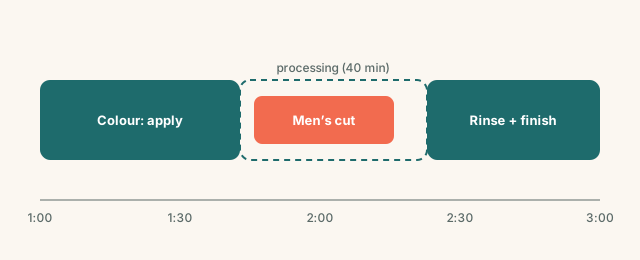
Fix: set processing time on each colour service in your scheduler, so the gap is real and bookable.
2. Walk-ins written down somewhere else
A walk-in at a busy salon often goes straight into the chair and gets entered later, or never. For those 45 minutes the calendar shows the stylist as free, and anything booking online or by text will offer that time.
Fix: enter walk-ins at the start, even as a placeholder. It takes ten seconds at the front desk and saves a very awkward conversation an hour later.
3. Two calendars that disagree
This is the most common one for booth renters and stylists who also work at a second location. They keep a personal Google Calendar alongside the salon's scheduler, and the two drift apart.
Fix: pick one calendar per stylist as the source of truth. If someone needs both, connect them so busy time on one blocks time on the other. Corvel reads both when they're linked and won't offer a time that's busy on either.
How often this happens
Across the salons on Corvel, double-bookings fell from about 1.8 per location per week in the first month to 0.3 by the third, almost entirely because owners fixed processing times and linked personal calendars during setup. The text assistant didn't fix them; it just made them visible, because it kept offering times that turned out not to exist.