
Why we text instead of call: reply rates from 40,000 reminders
We compared texted and phoned appointment reminders across 40,000 appointments. Texts got replies faster, more often and from more age groups than we expected.
Every salon I've worked in had a reminder call list. Someone sat down at 4 p.m. and rang through tomorrow's book, left a lot of voicemails, and got through to maybe a third of people. When we started building Corvel, one of the first things we wanted to know was whether texting really did better, or whether it just felt more modern.
So we looked. Across 40,000 appointments at 31 locations that ran both phone and text reminders during their first month with us, here's what we saw.
Replies
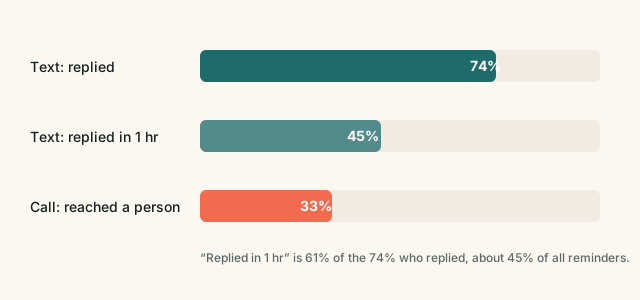
- 74% of texted reminders got a reply (a confirmation, a reschedule or a cancellation).
- 61% of those replies came within an hour.
- 33% of phone reminders reached a person, either live or by a call back.
The more useful number is what happened to the people who needed to change something. When a client can't make it, a text lets them say so in five seconds. A voicemail asks them to call you back during business hours, which most people mean to do and don't.
"Older clients won't text"
We heard this from almost every owner, and it's mostly not true. Clients over 65 replied to text reminders 68% of the time, a little below the overall rate but double the phone answer rate for the same group. The difference was in how they replied: longer messages, more full sentences, and more "Thank you dear, see you then." We made sure Corvel handles those as well as it handles "y".
What the reminder should say
The texts that got the most replies had four things in common:
- The business name first, so nobody wonders who's texting.
- The day, time and provider, in that order.
- One clear question: "Reply YES to confirm or tell us if you need to change it."
- Nothing else. No links in the first message, no emoji parade.
Clients who recieve a reminder like that two days ahead, and a short one the morning of, are the ones who show up.
Where calls still win
Calls are still better for the conversation you don't want to have by text: a large deposit, a complaint, a patient who seems confused about their care. Corvel hands those to a person. But for "are you still coming tomorrow?", a text is better for everyone, including the person who used to make the calls.